Small-Scale Lifting Solutions: The Practical Value of Electric Hoists
Small workshops, narrow warehouses, and construction sites often face challenges such as limited space, high requirements for lifting flexibility, and low efficiency in manual lifting. Electric hoists, with their targeted advantages, emerge as the ideal lifting solution for these scenarios, highlighting their practical value.
Compact size is the core advantage of electric hoists for adapting to small spaces. Most electric hoists feature a compact body and lightweight design, requiring minimal installation space. They can be quickly secured via I-beam tracks or fixed brackets, enabling flexible lifting and horizontal movement of materials even in narrow areas such as workshop corners or warehouse aisles. This effectively addresses the challenge of large lifting equipment being unable to access confined spaces.
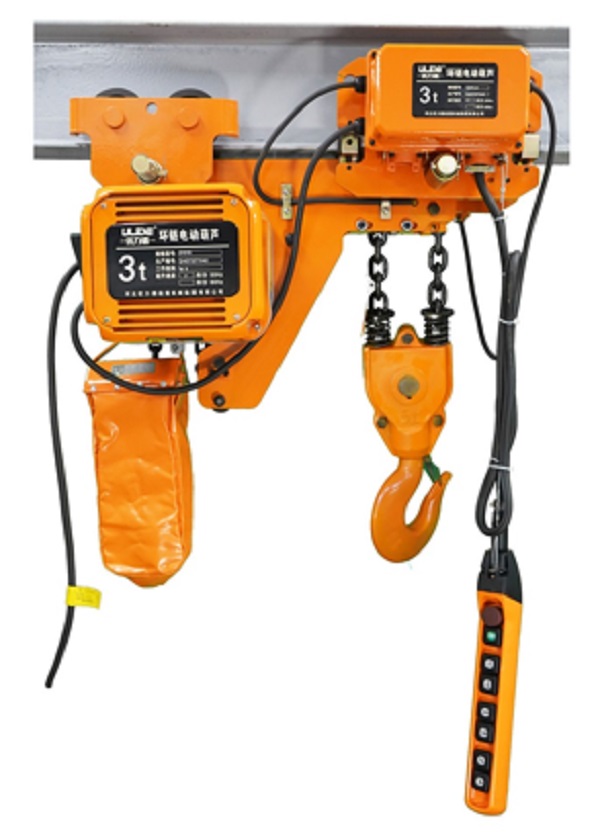
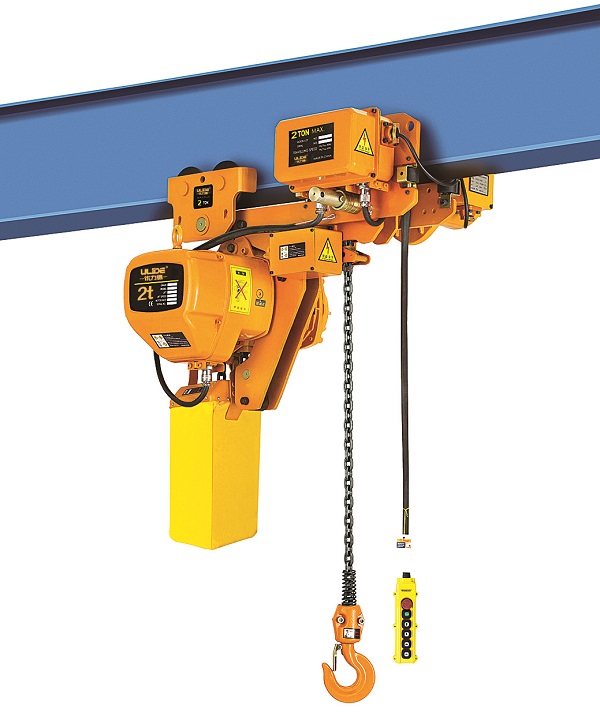
Secondly, Ulide also produces low-ceiling electric hoists, further minimizing the space occupied by the equipment structure, enabling better adaptation to narrow environments. For specific operational needs, a trolley can be added to convert it into a traveling electric hoist.
The electric hoist can be operated by just one person via remote control, eliminating the need for multiple operators and significantly reducing labor costs. Additionally, its smooth lifting speed and precise positioning effectively prevent material collisions and damage, making it particularly suitable for lifting precision parts and fragile goods in small-scale facilities.
Safety measures provide a solid foundation for practical value. The electric hoist is equipped with safety devices such as overload protection and limit switches, which prevent overloading and over-travel operations, minimizing safety risks in small, densely populated areas. From transporting workshop components to lifting construction materials, the electric hoist's "compact yet precise" advantages effectively solve lifting challenges in confined spaces, making it a key piece of equipment for enhancing operational efficiency.